

As told by Leilehua Yuen
Sweethearts of Long ago
I ka wā mamua, long, long ago on the island of Hawai`i in the district of Puna, there lived a beautiful girl. Lehua was her name. She had a face as round and glowing as the moon, eyes that glimmered like starlight, a back as straight as the pali, and hair that rippled down it like a waterfall. Her heart was as kind and generous as her face and form were beautiful, and all who knew her loved her.
She was especially cherished by the young warrior `Ōhi`a. His legs were as thick and strong as forest trees, his chest as broad as the pali, and his face was as smiling as the sun. His heart was brave and kind as his face and form were strong, and all who knew him loved him.
In the evening `Ōhi`a would play his `ohe hano ihu, his bamboo nose flute, sending the gentle melody to Lehua’s ears. She would follow it into the forest to meet him, and there they would admire the beauty of the night. Sometimes they strolled the forest paths by moonlight, sometimes wandering down by the sea to swim or surf and watch the phosphorescence of the tiny sea creatures they awakened.
Forest Ancestors
Lehua’s ʻohana had always loved the forest and its creatures. But many generations before, Lehua had kūpuna who truly were one with the forest’s ways, especially the birds. After storms, the old people would search the forest near their home for nests, eggs, and baby birds. They would carefully tie the nests back into the trees and put the baby birds back in the nests.
Whenever they made lei, they always made certain to leave enough flowers for the birds and butterflies to sip from, and they left enough ferns and other foliage that the plants could easily re-grow and the insects could hide. The couple were hospitable to other people, but mostly kept to the company of the trees, birds, bats, and insects. They did provide the konohiki with bundles of feathers, however, for the kūpuna kane was noted bird catcher. He knew all their habits and could imitate them perfectly. He also knew how to pluck just the right feathers without hurting the birds.
As they grew older and older, these kūpuna looked more and more like forest creatures themselves. Their hands and feet grew slender, like the feet of birds, and their eyes looked like the little bright eyes of birds. Their hair, which they had always trimmed extra short to be out of their way, began to look rather like hulu manu, bird feathers. The kupuna wahine had always loved bright colors, and had been known for the bright red ʻōhelo berry dye she used when she beat the kapa for their pāʻū and malo.
When people saw the old folks flitting through the forest, they remarked on how much they resembled birds, themselves!
One day, the couple was not seen making their usual forays into the kuahiwi, so their descendants who lived in the nearby kauhale went to check on them. Their bodies were in their hale, lying together, gently embracing, covered with one kapa. The ʻohana tenderly prepared the old couple for their final rest and performed the kākūʻai, so that the old people would be able to watch over their ʻohana as ʻaumakua.
When all was done and the people were gone, on a tree outside the door a pair of bright red birds were perched. They remained near the old hale pili until time and weather did their work. When the last timber crumbled into rich soil, ready for a new generation of seedlings, the ʻiʻiwi and ʻapapane flew away. But they always seemed to appear when any descendant of that ʻohana entered the forest.
He Pua—A Descendant
Generations later, a sweet child was born. She was a pretty as the most beautiful flower. Her nature was as sweet as the sweetest fragrance. Her pink lips were always smiling, and her shining black eyes looked about with delight at the beauties of the forest surrounding her home. Her parents named her Lehua, which can be translated to English as red or rainbow-hued like the mother-of-pearl shell. It also can mean laden, as a tree with beautiful blossoms. The two birds loved to follow their descendant through the forest, guarding and guiding her as she explored its paths and learned its ancient wisdom.
And so, when Lehua grew old enough for courtship, the two birds gave their approval to the kindly and handsome ʻŌhiʻa, and would add their sweet song to the melody of ʻŌhiʻa’s ʻohe hano ihu.
One evening, as `Ōhi`a played his bamboo flute, before Lehua arrived at their meeting place, a different young woman appeared. She had a face as round and glowing as the moon, glowing eyes that smouldered like fire, back as straight as the pali, and ʻehu hair that rippled down it like a cascade of lava. She approached `Ōhi`a, who greeted her politely and then continued to play his flute until Lehua arrived.
The stranger watched the two wander away.
Another evening, as `Ōhi`a again played his ʻohe hano ihu for Lehua, the stranger appeared. She seemed even more lovely than the first time. “`Ōhi`a, come and be mine!” But `Ōhi`a was only polite, and waited for his beloved Lehua. Again, the stranger watched as they went on their way. This time, steam seemed to rise gently from the ground where she stood. Was that a slight tremor of the ground?
On another evening, yet again the stranger appeared. She was even more beautiful than before, and the fire in her eyes glowed red. Again, `Ōhi`a was polite, but only waited for Lehua. “Come, `Ōhi`a, leave that girl and be mine,” the stranger told him. “I am sorry, but my heart belongs to Lehua,” `Ōhi`a replied.
“Don’t you know who I am?” the stranger asked.
“You are the great goddess, the sacred woman, Pele,” `Ōhi`a replied. “I am not worthy of you. I am content with my mortal love, Lehua.”
As the two spoke, Lehua arrived. `Ōhi`a put his arms around her and held her close. Pele glared at the couple. The ground began to tremble. She stamped her feet and lava spurted forth, creating a fiery ring around the couple, but with a clear path to the goddess.
“Leave her behind and come to me, and you will live,” she told `Ōhi`a
“I am sorry, oh Sacred One. Lehua is my very heart. If I were to leave her I would die,” `Ōhi`a replied.
“Then you shall die with her!” The lava from the curtain of fire began to ooze toward the couple. “Leave her and come to me!” `Ōhi`a only held Lehua more tightly.
The lava came within inches of the pair. The tiny ʻiʻiwi and `apapane darted about them, flitting at the lava as if trying to warn it away, but the molten rock was inexorable in its approach. The other birds heard their cries and joined them, diving frantically at the face of the lava, trying to cool it with the wind of their wings to harden it and halt its flow. But the lava was inexorable.
`Ōhi`a lifted lehua above the glowing, molten rock. It reached his feet and began to cover them. He lifted Lehua higher. The birds darted straight up in the air, crying and chittering. ʻIʻiwi and ʻApapane flew away, chirping as loudly as they could. Had they, at last, abandoned Lehua?
The lava began to heap around `Ōhi`a’s legs. He held his sweetheart higher. By the time the little red birds returned, Lehua was sitting on `Ōhi`a’s shoulders, caressing his face and weeping. ʻIʻiwi and `Apapane had tried to rally the forest spirits to rescue their charge and her sweetheart, but none of them had power enough to stop Pele.
But, what they, spirits of the forest, did have power over was the growth of plants and forest creatures. `Ōhi`a and Lehua were such a beloved part of the forest that the little spirits began to change the burning flesh of his legs to wood. His skin became bark. Feeling himself changing, before his arms became branches, ʻŌhiʻa plucked Lehua from his shoulders. He held her high in his branches, up away from the lava which was piling up against his trunk. As he held her aloft, he felt his body stiffen and looked up so that she might be the last sight to fill his eyes.
He saw her hair billowing in the hot wind that blew across the lava. He could hear it blowing. He could hear the roar of fire as the lava ignited grass, ferns, brush, and trees. The wind swirled and carried glowing embers dancing in the air. Where they landed, new fire ignited. Some landed in Lehua’s hair and bloomed like red flowers. Suddenly, the girl was gone, replaced by the flame colored blossoms which bear her name.
Learning from Legends
Lengends have so much to teach us. The close relationship between the ʻiʻiwi, ʻapapane, and the lehua teach us about the relationship of the birds and the forest, that they need each other. It explains how when the steam suddenly begins to rise from the cracks, we need to be careful, perhaps an eruption will come soon. The legend shows us how the lava, even when it consumes the ʻōhiʻa trees, the trees regenerate on the fresh lava.
Today, the descendants of little ʻīʻiwi and `Apapane continue to visit their beloved Lehua and her sweetheart, and can be seen kissing her as she rests in `Ōhi`a’s leafy arms. The ʻŌhiʻa-lehua is emblematic of strength, endurance, and the ability to overcome obstacles, as it is the first woody plant to return to the fresh lava flows and regenerate the forest.
Weeping Lehua – Plucking blossoms bringing rain?
People often say that you should never pick the lehua blossom because if you separate the lovers it will cause rain, for that is the forest crying. That is an example of what happens when you tell only part of a story.
Traditionally, lei makers do not pick lehua on the way into the forest, but only after they have gone in, performed their harvesting protocols, and are coming back out. The reasons for this custom are very practical.
First, the areas where the lehua is most abundant and the kīhene most full are the misty rainforests on the windward side of the islands. There, mornings are often bright and sunny, though as the day wears on, the clouds drift in and the misty rains begin to kiss the forests. As the clouds thicken, it becomes easy to get lost in the dense ground clouds. So, it is good to harvest early and be out of the forest before the clouds set in.
Second, the lehua blossoms and liko are filled with moisture and more sturdy when picked in the morning. Picked in the afternoon, they are already starting to wilt and will not last as long when fashioned into lei, so go into the far end of your picking are quickly and pick on your way out so you will have morning blossoms.
Third, if the blossoms are picked on the way in, they will spend at least twice as much time packed together being crushed and heated in the bag or basket in which they are carried, so they will not last as long, but will wilt more quickly when made into lei.
Legends teach us many things, and even a simple legend, like that of `Ōhi`a and Lehua can teach us about natural history, botany, and weather systems.
And so we leave our story of the lehua with this saying: Ka ua moaniani lehua o Puna. The rain that brings the fragrance of the lehua of Puna.
In the hula tradition, the lehua blossom is sacred to Pele, and emblematic of Hiʻiaka and Hōpoe.

| No luna i ka hale kai no ka ma‘alewa Nānā ka maka iā Moananuikalehua Noho i ke kai o Maliu ē I kū a‘ela ka lehua i laila lae ‘Eā lā, ‘eā lā, ‘eā, i laila ho‘i I laila ho‘i Hōpoe ka lehua ki‘eki‘e i luna lā Maka‘u ka lehua a i ke kanaka lae Lilo a i lalo e hele ai ‘Eā lā, ‘eā lā, ‘eā, i lalo ho‘i I lalo ho‘i Kea‘au ‘ili‘ili nehe i ke kai lā Ho‘olono i ke kai a‘o Puna lā ‘eā A‘o Puna i ka ulu hala lā ‘Eā lā, ‘eā lā, ‘eā, Kai ko‘o Puna Kai ko‘o Puna From above at Kahalekai, from Kama’alewa The eyes gaze at Moananuikalehua Who resides on the shore of Maliu With the lehua standing tall there There, indeed There, indeed Hōpoe is the exalted lehua on high The lehua is fearful of men Leaving them to walk down below Down below, indeed Down below, indeed The pebbles of Kea’au clatter in the tide Listen to the sea of Puna Of Puna in the hala groves The rough sea of Puna The rough sea of Puna. Traditional |
The Tree Behind the Legend
Kanikau (poem), art, and story by Leilehua Yuen

Aloha ka ‘āina maika’i
Aloha nā makani, ka hā o Ke Akua
Aloha ka ‘āina kapu
Aloha ka hū, ka hā o Ka Wahine
Aloha ke kuahiwiAloha ke kula ē
Aloha ka wekiu
Aloha ka noe kolokolo i ka uluwehi
Aloha nā mauna
Aloha nā pali kai ē
‘Auhea wale ana ‘oe e ‘Ōhi’a
‘Auhea wale ana ‘oe e Lehua
Lā’au ‘ohu’ohu,
Pua mohala
Nā me’e
O ka mo’olelo,
Ke oli,
Ke mele
Nā hoa aloha
I hea, i hea e mūkīkī ai nā manu?
I hea, i hea e ‘āko’ako’a ai nā manu?
Ho’ina, ho’ina mai Kūka’ōhi’alaka
Ho’ina, ho’ina mai Hinaulu’ōhi’a
E noho, e ulu i ka nahele o Hawai’i nei
Loving farewell to the good land
Loving farewell to the winds, the breath of God
Loving farewell to the sacred land
Loving farewell to the steam, the breath of the Goddess
Loving farewell to the forests
Loving farewell to the plains
Loving farewell to the summit
Loving farewell to the mist that creeps through the groves
Loving farewell to the mountains
Loving farewell to the sea cliffs
Where have you gone, o, ʻŌhiʻa
Where have you gone, o Lehua
Budding tree,
Blooming flower
Warm companions
In story,
In chant,
In song
Cherished friends
Where, o where shall the birds sip?
Where, o where shall they land?
Return, return Kūka’ōhi’alaka
Return, return Hinaulu’ōhi’a
Dwell, grow in the forests of beloved Hawai’i
The ‘ōhi’a-lehua, (Metrosideros polymorpha et al.) is a keystone member of the Hawaiian forest community. Without the ‘ōhi’a-lehua, the Hawai’i we know would not exist.
The saying He kumu lehua muimui i ka manu, “A lehua tree covered with birds,” is a poetic reference to someone so attractive as to have many suitors, and it also shows the importance of the ‘ōhi’a-lehua in the forest.
Five Species, Infinite Adaptations
Botanists currently divide it into five species:
Metrosideros polymorpha—The most common species looks as though it could be divided into at least five different species, itself. “Polymorpha” means “many forms,” and this species can range from tall and stately to shrubby and gnarled. The leaves range from thin and smooth to fleshy and fuzzy, with the mu’o (leaf buds) and liko (budding or newly unfolded leaves) ranging in color from pink to silver. It has adapted to virtually every ecolological zone Hawai’i has to offer and grows from sea level to about 7,000 foot elevation. The pompon blossoms range from delicate creamy yellow with long tender stamens to deep carmine with short spikey stamens. Salmon, orange, pale green, and even white, though rare, can be found.
M. tremuloides—Also known as lehua ‘āhihi (the Hawaiian name translates as “entangled,” the Latin as “trembling”), has leaves and branches that are longer and more slender than those of M. polymorpha.
M. rugosa—The lehua papa (translated as lehua growing close together) earned its Latin name with its rose-like deeply furrowed leaves which grow in rosettes.
M. macropus—With its long pointed leaves and drooping branches, when not in flower, it looks a bit like a ficus. When its butter-yellow pompons bloom, it is obviously an ‘ōhi’a-lehua. In this species, yellow is more common than red.
M. waialeale—Endemic to Kaua’i, the smooth long slender leaves and tiny mu’o are distinctive of this lehua.
Each of the lehua is uniquely adapted to its environment, and creates its own microenvironment on which other species of Hawai’i depend.
Provider of Life: Food, Shelter, and Water
Though it is the first woody plant to colonize fresh lava, it does not stand alone. Its flowers are a critical food source for many native birds, for bees (lehua honey is an important part of our economy), and for butterflies. Its bark catches our tropical rains and provides a spongy medium in which whole communities of epiphites grow. These arboreal communities in turn are home to the small fauna of our islands. Its structure both above and below ground captures the mist of our forests and lets it slowly seep into the ground, replenishing our water supply.
I walea ka manu i ka ‘ula o ka lehua, e ‘āko’ako’a ai, mūkīkī ana i ka wai pua. The bird is attracted by the redness of the lehua and lands to sip the nectar. One is attracted by beauty, yet stays for nourishment. Without the ‘ōhi’a-lehua, where will they find it?
Sacred Manifestation and Cultural Practice
‘Ōhi’a-lehua is also a critical part of the cultural landscape of the islands. It is a kinolau, a manifestation of Kū-ka’ōhi’a-laka. It is an aspect of Kū, one of the four major male deities in traditional Hawaiian pantheon. Kū-ka’ōhi’a-laka figures in the practice of certain traditional hula people, carvers, and lei makers. The ‘Ōhi’a-lehua also is a manifestation of Hina-ulu-‘ōhi’a, a female deity of canoe carvers.
Traditional Hawaiian people recognized the importance of the ‘ōhi’a-lehua, and extolled it in numerous chants and songs. It is found in the hula chants of Hi’iaka and in songs of modern times, and many sayings reference the tree and its flower.
The blossom gives its name to a famous rain of Hilo, Ka Ua Kani Lehua—the rain that moistens the lehua blossoms. This and other sayings, such as I mohala no ka lehua i ke ke’eke’ehi ‘ia e ka ua—Lehua blossoms unfold because the rains tread upon them, show an understanding of the relationship between weather systems and the arboreal environment.
Once upon a time, people would say, ‘Opihi kauwawa lehua o Hōpoe—The ‘opihi is covered by the lehua blossoms of Hōpoe, a reference to the days when the ‘ōhi’a-lehua forests were so extensive they covered the slopes of Puna down to the sea. When they bloomed, the fringes of lehua blossoms fell into the sea and washed up over the rocks, hiding the ‘opihi. Today, how often do we see this once-famous sight?
Wood for Temple, Home, and Artistry
The wood of the ‘ōhi’a-lehua was used for many things. It was preferred for carving ki’i (images), including temple figures and smaller figures. It also was used for temple structures and homes, providing the posts, rafters, purlins, and girts. Strong palisades for heiau were built from it. Occasionally, it might be made into a bowl, though not often, as it is a difficult wood to work. It is so hard that it is an excellent firewood, cooking hot and long.
The more easily worked and less brittle koa is preferred for the hull of a canoe, and the hard ‘ōhi’a is useful for masts and the rails where the softer koa would wear away from the friction of the lines chafing across it, as well as for the ‘iako (outrigger booms).
The pua (flower) and liko (leaf bud) have been used in lei for so long that these unique garlands appear in ancient legends. In addition to ornamentation, the liko are used in making medicine.
A New Threat: Rapid ʻŌhiʻa Death
Now, the ‘ōhi’a-lehua is under attack not only by habitat loss and the usual invasive species, but a vascular wilt fungus, Ceratocystis fimbriata. As of January 2016, 34,000 acres were affected. What is being done to kōkua (help) this iconic tree of our islands? Various groups and individuals are playing different roles.
Another Hawaiian ‘ōlelo no’eau (wise proverb) says, Ho’i ka ‘o’opu ‘ai lehua i ka mapunapuna. The lehua-eating ‘o’opu has gone back to the spring. It symbolizes returning to one’s source. To do so, we must protect it.
Community Response: A Cultural Leader’s Call to Aloha
Over the past decade, several community leaders have made statements and published open letters.
Kekuhi Keali’ikanaka’oleohaililani wrote how her grandparents taught her that all things are ‘ohana. Refering to her grandmother, “At the forest she would pick liko from the ‘Ōhi’a, hold it in her fngers, and say, ‘Kekuhi, this is your ‘ohana,’ and we would give a chant of thanks.”
“I continue to dedicate my life to dancing, chanting, singing, and teaching how to Aloha ALL of these ‘ohana…like many of you do in big and little ways through HULA. I am writing because our hula ‘ohana, the tree that is most used in our art form, the tree that is most responsible for making sure that we have water, the tree that is most used in the carving of ki’i, the tree that we can find on almost every landscape on our island, the tree that many of our bird people depend on, the tree that Hōpoe and Hi’iaka made lehua lei from, the beloved ‘ŌHI’A… the tree that my Gramma introduced to me as ‘ohana ~ is being made sick by a fungus, Ceratocystis fimbriata (aka Rapid ‘Ōhi’a Death or ROD), that lives both in the soil and in the tree. OUR ‘Ōhi’a needs our attention, our awareness, and our aloha.” (Kekuhi’s letter can be found here.)
Science Responds: Studying the Fungus
JB Friday, of the University of Hawai’i College of Tropical Agriculture and Human Resources, says CTAHR, the USDA Forest Service, and the USDA Agriculture Research Service all are studying the fungus and the disease.
Practical Steps: Containment and Prevention
UH, the DLNR Division of Forestry and Wildlife, the Department of Agriculture, and the Big Island Invasive Species Committee are disseminating information on what people can do. They suggest on their website:
“To reduce the spread of Ceratocystis, landowners should not transport ‘ōhi’a wood to other areas of Hawai’i Island, and should comply with the Department of Agriculture quarantine and not ship anything made of ‘ōhi’a inter-island without a permit.
Tools used for cutting infected ‘ōhi’a trees should be cleaned with a 70% rubbing alcohol solution.Chain saw blades should be brushed clean, sprayed with cleaning solution, and run briefly to lubricate the chain. Shoes, tools, and clothing used in infected forests should also be cleaned, especially before being used in healthy forests.
Vehicles used off-road in infected forest areas should be thoroughly cleaned underneath so as not to carry contaminated soil to healthy forests.”
CTAHR requests that landowners who suspect they have an infected ohia tree outside of the Puna or South Hilo districts contact them.
Seeds for Tomorrow: The Lyon Arboretum Initiative
Looking to the future, The University of Hawai’i Lyon Arboretum Seed Conservation Lab will collect and preserve ‘ōhi’a seeds from all islands for future forest restoration, after the threat of Rapid ‘Ōhi’a Death has passed.
The project includes sending staff on collection trips to Moku Hawai’i to target high risk areas and day trips to target ‘ōhi’a species endemic only to the island of O’ahu. It will also facilitate collaboration with professional field botanists from partner agencies who will send ‘ōhi’a seeds from other islands, and work with UH and US Department of Agriculture scientists to optimize the efforts on Moku Hawai’i. It will provide for long term storage of ‘ōhi’a seeds in the Lyon Arboretum seed bank. Information on how to participate can be found at the #OhiaLove web page.
For more information on Rapid ʻŌhiʻa Death and how you can help our forests, visit the website of the Hawaiʻi Invasive Species Council
Cultural Practices & Customs
Traditional Uses
Medicines: The flower of the “‘ōhi’a a-pane” is used as a medicine for childbirth. Also the young leaf buds are used to treat muhe’e kea (pale) in babies (Chun 1998:43)
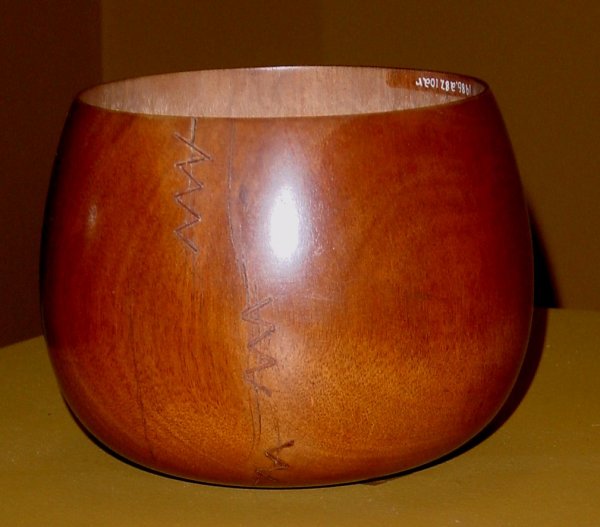
Non Medicinal Uses: Wood for images (ki’i), posts and rafters, fences for temples, firewood, canoes (Malo 1951:20), construction of luakini heiau (Malo 1951:159), flowers and young leaf buds for lei (Abbott 1992:126–127); bowls (but difficult to work, see Abbott 1992:87). Placed on hula altars for Kuka’ohi’a Laka (Abbott 1992:117). Musical instruments (Krauss 1993:80). In the Ethnology Collection at Bishop Museum there is a post-contact example of the wood made into a bowl.
Propagation Information
Collect fresh unsoaked seeds, sprinkle onto firm, moist potting medium and water daily for the 1st year, fertilize monthly; 2 foot plant can be grow in 1 year; use sterile potting soil, not dirt; strong 6-12 inch can be planted in ground. Also by cuttings and air layering (Bornhorst 1996:61–64; Bornhorst and Rauch 1994:16–17; Nagata 1992).
Hawaiian Native Plant Propagation Database.
Native Plants Hawaii.
Looking for a good book?
…Imagine Sherlock Holmes. Now, imagine a hapa (half Hawaiian) girl living in the town of Hilo, on the island of Hawaiʻi. Inspired by the news accounts of the renowned detective, she determines, with the help of her younger cousin, to become Hawaii’s first consulting detective in this pastiche of the Great One’s adventures. Click here to buy my books and support a local author!

Hawaiian Glossary
‘āina: land; the earth; often used in the phrase “aloha ka ‘āina” (love for the land)
‘ala: fragrance, scent; the sweet smell carried on the wind, particularly of flowers and plants
aloha: love, compassion, affection, kindness; also used as a greeting or farewell; embodies the spirit of Hawaiian culture and relationships
‘aumakua: guardian spirit; a spiritual protector, often an ancestor deity or animal spirit that watches over and guides a person or family
‘ehu: reddish in color; often used to describe hair with reddish or golden tones
hala: pandanus tree; its fragrant bracts were used in traditional Hawaiian homes
heiau: Hawaiian temple; a sacred place of worship and spiritual practice
Hina-ulu-‘ōhi’a: female deity of canoe carvers; a manifestation associated with the ‘ōhi’a tree and traditional Hawaiian craftsmanship
Hi’iaka: figure from Hawaiian hula tradition; associated with lehua blossoms and sacred practices
Hōpoe: figure from Hawaiian hula tradition; associated with lehua blossoms and sacred dances
kākūʻai: to deify a dead relative by food offerings and prayer; to dedicate the dead to become family protectors (ʻaumākua) or servants of ʻaumākua
kīhene lehua: lehua blossom cluster; the grouped flowers of the lehua tree
kii: carved temple figures or images; sacred wooden representations used in Hawaiian religious practice
kinolau: physical manifestation or embodiment of a deity; a form that a god or goddess takes in the physical world
Kū-kaʻōhi’a-laka: male deity of whom the ‘ōhi’a tree is a kinolau (manifestation); important to hula practitioners, carvers, and lei makers
lei: garland or wreath, typically made of flowers, leaves, or vines; given as a symbol of affection, respect, or aloha
liko: leaf bud; the young, newly emerging leaves of a plant, often used in lei-making and traditional medicine
maile: fragrant vine used in lei-making and traditional Hawaiian practices
mele: song, chant, or poem; a form of Hawaiian oral tradition and cultural expression
mu’o: leaf bud (alternative term); the emerging buds on a plant
‘ōhe hano ihu: bamboo nose flute; a traditional Hawaiian musical instrument played through the nose
‘ohana: family; in Hawaiian culture, this term extends beyond blood relations to include all people connected by bonds of aloha and shared responsibility
‘ōhi’a: the tree (Metrosideros polymorpha and related species); an endemic Hawaiian tree that is a keystone species in Hawaiian forests
‘ōlelo: speech, words, language; also used for chant or prayer; the vehicle of Hawaiian oral tradition
‘ōlelo no’eau: proverb, wise saying, or traditional saying; encodes Hawaiian wisdom, knowledge, and cultural values
‘opihi: limpet; a shellfish that clings to rocks in Hawaiian coastal areas
pali: cliff; a steep rock face, often used in Hawaiian place names and descriptions
Pele: the great goddess of volcanoes and fire; a central figure in Hawaiian mythology and spiritual practice
pua: flower, blossom; the bloom of a plant
pua lehua: lehua blossom; the distinctive pompon-shaped flower of the ‘ōhi’a tree, ranging in color from red to yellow, orange, white, and salmon
wai: water; essential to Hawaiian life and spirituality
wekiu: summit, peak; the highest point of a mountain or elevation